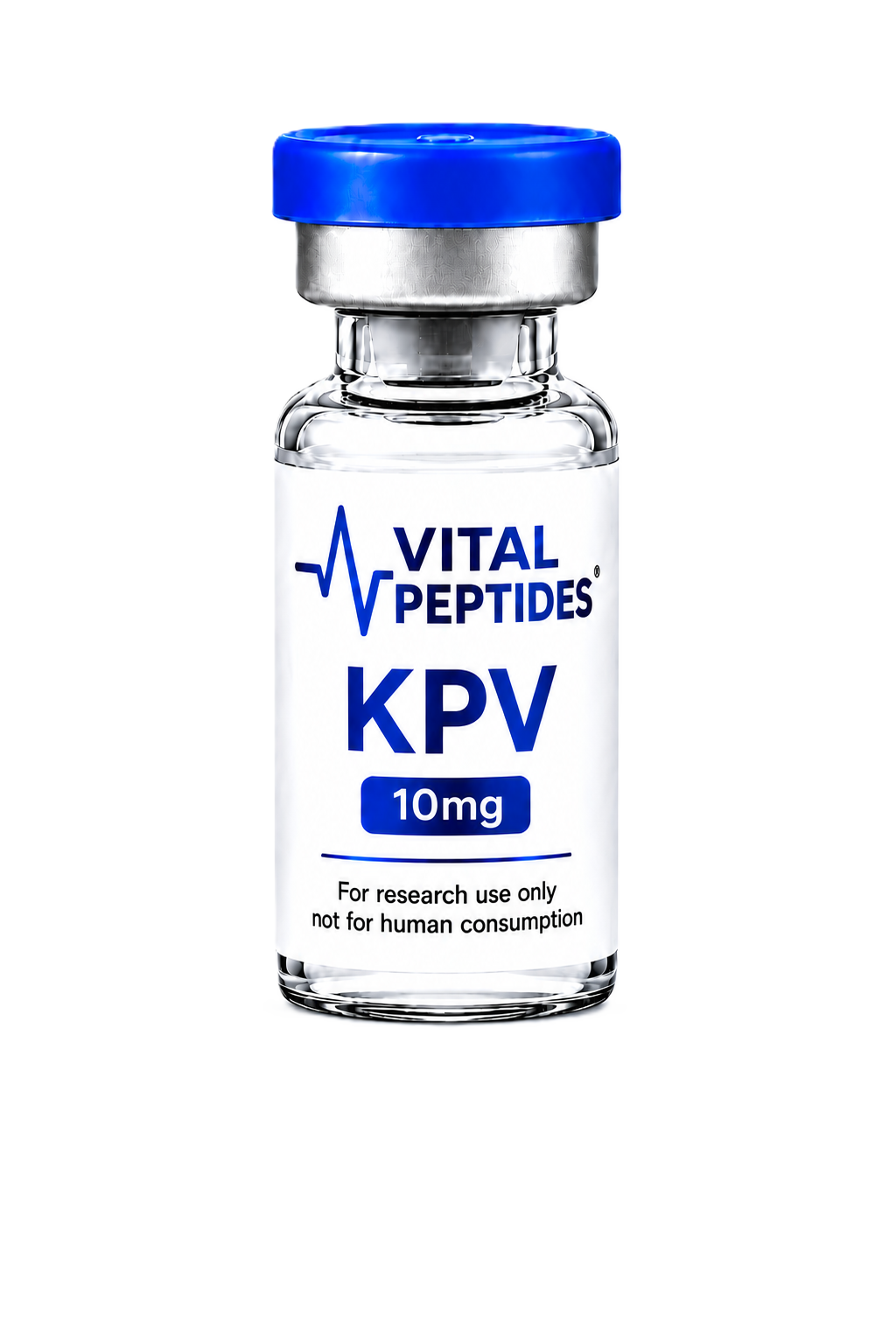
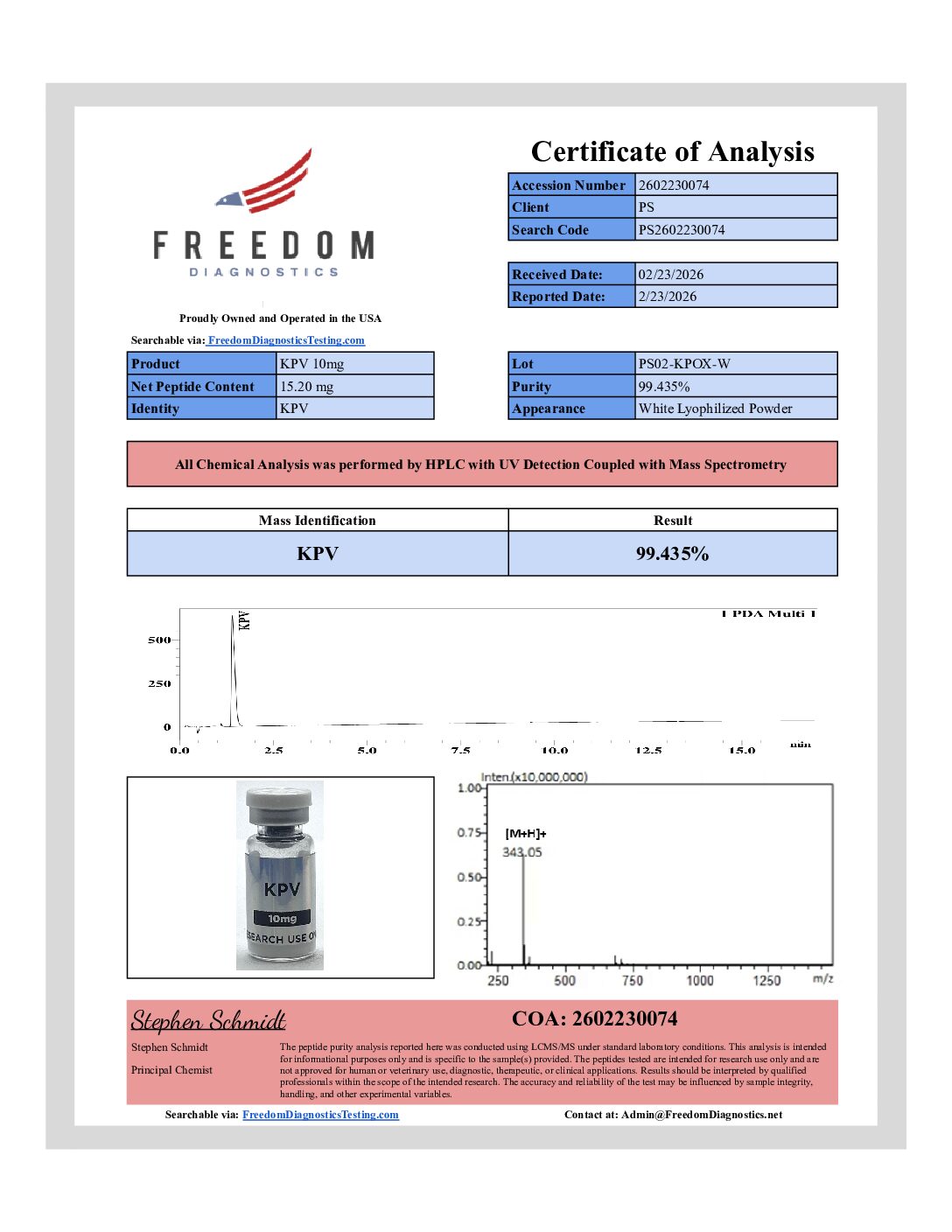
KPV (Lysine-Proline-Valine) is a naturally occurring C-terminal tripeptide fragment of alpha-melanocyte-stimulating hormone (α-MSH). Unlike the full-length hormone, KPV does not exhibit melanotropic activity, meaning it does not stimulate pigment production. In laboratory research settings, KPV is extensively investigated for its potent anti-inflammatory and antimicrobial properties, making it a critical compound for studying immune modulation without the confounding variable of melanogenesis.
Scientific literature focuses heavily on KPV’s ability to inhibit the activation of NF-κB (nuclear factor kappa-light-chain-enhancer of activated B cells), a key regulator of inflammatory responses. It is frequently utilized in studies examining the reduction of inflammatory cytokines, the treatment of intestinal inflammation models (such as colitis), and its efficacy against various pathogens, including Staphylococcus aureus and Candida albicans, in controlled, non-human experimental models.