
What Are Research Peptides? A Complete Beginner’s Guide
The term research peptides appears on supplier websites, in scientific papers, and in online discussions, yet it is rarely explained clearly. Many people assume research peptides are a type of supplement or medicine. They are neither. This guide explains what research peptides are, how they are made, the most common categories, how scientists use them, and how they differ from approved medicines.
Quick Answer: What Are Research Peptides?
Research peptides are synthetically produced short chains of amino acids that are manufactured and sold for laboratory and scientific research purposes only. They are not approved by regulatory agencies for human or animal consumption, and they are not classified as drugs, supplements, or food. Scientists use them to study how specific peptide sequences interact with cells, receptors, and biological processes in controlled settings such as cell cultures and animal models.
What Is a Peptide?
A peptide is a short chain of amino acids linked by peptide bonds. Amino acids are the building blocks of proteins, and the main difference between a peptide and a protein is length. Most scientists describe a peptide as a chain of 2 to 50 amino acids, while longer chains are considered proteins.
The human body produces thousands of natural peptides. Insulin, oxytocin, glucagon, and many immune and nervous system signaling molecules are all peptides. Because they act as messengers between cells, peptides are involved in almost every biological process, from metabolism to tissue repair. By synthesizing a specific sequence in the lab, scientists can observe which receptors it binds to and what effects it produces.
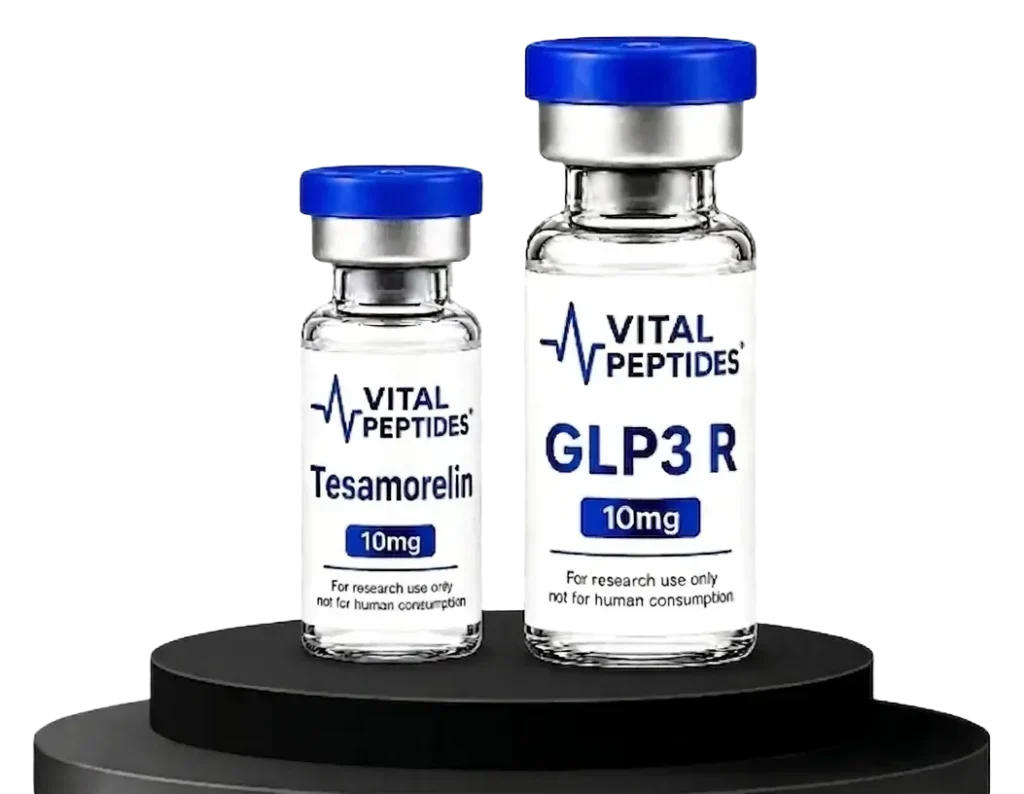
What Makes a Peptide a “Research Peptide”?
The term does not describe a chemical property. It describes a legal and commercial category. A research peptide is any synthetic peptide produced and sold for scientific investigation rather than for treating people or animals. Three characteristics define it:
- Intended use: The product is meant for in vitro (cell culture) or in vivo (animal model) research, not human consumption.
- Regulatory status: The compound has not received approval from agencies such as the FDA or EMA in the form in which it is sold.
- Labeling: Suppliers mark these products “for research use only” because they are not manufactured or tested to pharmaceutical standards.
The same sequence can exist in different categories at once. A peptide may be sold as a research chemical while a pharmaceutical version, produced under strict standards and approved for a specific condition, is available by prescription. The molecule may be similar, but the testing and legal standing are completely different.
How Research Peptides Are Made
Most research peptides are produced through solid-phase peptide synthesis (SPPS), a method developed by Bruce Merrifield in the 1960s that earned him the Nobel Prize in Chemistry in 1984. The first amino acid is attached to a solid resin bead, and additional amino acids are added one at a time in a specific order. Once the sequence is complete, the peptide is released from the resin, purified using high-performance liquid chromatography (HPLC), and freeze-dried into a stable powder. This lyophilized form is how most research peptides are shipped and stored.
Common Categories of Research Peptides
Research peptides are usually grouped by the biological pathway they are used to study. These descriptions reflect how the compounds appear in scientific literature, not any approved medical use.
- Tissue repair peptides: BPC-157 and TB-500 are studied for effects on cell migration and tissue healing, mostly in rodent models.
- Growth hormone secretagogues: CJC-1295, ipamorelin, and the GHRP family are used to study how the pituitary gland releases growth hormone.
- Metabolic and GLP-1 related peptides: Sequences that mimic glucagon-like peptide-1 are heavily studied for their role in appetite and blood sugar regulation. Some have approved pharmaceutical versions sold separately.
- Melanocortin peptides: Melanotan I and II are studied for effects on melanin production and receptor pharmacology.
- Cosmetic signaling peptides: GHK-Cu and similar sequences are studied for their effects on collagen production and skin cell behavior.
- Neuropeptides: Semax and Selank are studied in the context of neurotransmitter regulation and stress response.

How Scientists Use Research Peptides
Common applications include receptor binding studies, cell culture experiments that measure changes in cell growth or gene expression, animal model research, screening candidates for drug discovery, and use as reference standards in analytical chemistry. In every case, the peptide is handled by trained personnel following laboratory protocols.
Research Peptides vs Pharmaceutical Peptides vs Supplements
One of the biggest sources of confusion is how research peptides differ from other peptide products. The table below summarizes the main differences.
| Feature | Research Peptides | Pharmaceutical Peptides | Peptide Supplements |
| Intended use | Laboratory study only | Treatment of diagnosed conditions | General nutrition |
| Regulatory approval | None for human use | Approved by FDA, EMA or similar bodies | Regulated as food, not as medicine |
| Who can access | Labs, universities, researchers | Patients with a prescription | General public |
| Typical form | Lyophilized powder in vials | Injection pens, tablets, or vials | Powders, capsules, drinks |
| Quality oversight | Depends on the supplier | Strict GMP manufacturing | Food-grade standards |
| Labeling | Not for human consumption | Full prescribing information | Nutrition facts panel |
A research peptide has not been tested for safety or effectiveness in humans in the form it is sold. A pharmaceutical peptide has passed clinical trials and is produced under Good Manufacturing Practice (GMP) standards. A supplement, such as collagen peptides, is a food product broken down during digestion.
Legal and Regulatory Status
In the United States, research peptides are generally legal to buy and sell for laboratory purposes. They cannot be marketed for human consumption, and any claim that they treat or prevent a condition violates FDA regulations. In 2023, the FDA placed several popular peptides, including BPC-157 and CJC-1295, into a category of bulk drug substances that it considers to raise significant safety concerns, which further restricted access through compounding pharmacies.
The European Union, United Kingdom, Australia, and Canada apply similar rules: research use is permitted under laboratory regulations, while sale for consumption or advertising with health claims is prohibited. Some peptides are also banned by the World Anti-Doping Agency. The phrase “for research use only” is a legal boundary, not a formality.
Quality Standards: Purity and Testing
Because research peptides are not produced under pharmaceutical oversight, quality varies widely between suppliers. Researchers evaluate quality through purity percentage (measured by HPLC, with reputable suppliers reporting 98 percent or higher), a Certificate of Analysis from an independent lab, and batch traceability with lot numbers. Proper storage, usually refrigerated or frozen and protected from light, prevents degradation. A supplier that cannot provide third-party testing should be treated with caution.
Frequently Asked Questions
Are research peptides legal?
In most countries they are legal to purchase for laboratory research. They are not legal to sell or market for human consumption.
What is the difference between a peptide and a protein?
Both are amino acid chains. Peptides are shorter, usually 2 to 50 amino acids, while proteins are longer and fold into complex structures.
Why do research peptides say “not for human consumption”?
Because they have not been manufactured, tested, or approved to the standards required for medicines. The label reflects the absence of human safety data.
Can research peptides become approved drugs?
Yes. Many approved peptide medicines began as research compounds, but reaching approval requires preclinical studies, clinical trials, and regulatory review over many years.
Conclusion
Research peptides are synthetic amino acid chains produced for scientific study. They are defined by intended use and legal status rather than chemistry, and they sit clearly apart from approved medicines and dietary supplements. The field contributes to real scientific progress, but the “research use only” label exists for a reason: the safety and effects of these compounds in humans remain unproven until they pass formal clinical testing.